It’s not about how to write a blog post.
It’s about what to write that eats up most of your brainpower and starting from scratch is the hardest part of writing a blog post.
That’s why smart bloggers:
- Don’t create; they curate the best ideas
- Focus on their niche
- Write for themselves
- Understand different types of blog posts well
- Follow a writing framework
Also, if you have a writing framework, it gives you a big heads up and you can start writing a lot faster by completing the sections of your blog post framework to produce a unique piece of content at speed each time.
The first daily newspaper appeared in 1660 in Leipzig.
In 1609, Johann Carolus published the first regular newspaper in Strassburg, comprising brief news bulletins. By the 1620s, numerous major cities had newspapers of 4 to 8 pages appearing at irregular intervals.
Publishing daily or more recently with the availability of electronic media and internet news outlets had to broadcast news several times a day. It is a huge challenge to publish at this pace and maintain quality, which is only possible using a publishing framework.
Have you ever thought about how news publications can manage to publish news on a daily basis for years?
All news outlets mostly follow a similar framework to meet the pace of publishing, yet the actual news is different every time.
Frameworks enable you to produce content at a pace without limiting you to publish unique content.
Don’t you think if news publications can produce time-sensitive content at a mass scale following frameworks, it is worth having a blog writing framework to create blog content consistently?
Before we get to how to write a blog post framework, it is crucial to understand the important elements of a blog post first.
Let’s get started!
Popular Types of Blog Posts
There are quite a few different types of blog posts you can write depending on your writing needs. However, the following are the most popular types of blog posts, which work in most niches.
You may want to choose publishing one type of blog post only such as list posts, which are most popular and generally easy to write. However, mixing up your post types can help you overcome writer’s block and add variety to your blog content.
Here are a few popular types of blog posts you can write.
List Posts
These are some of the most common types of blog posts seen all over the internet. Lists are a great way to streamline information and make it easy to digest. People usually don’t have the time to read your post word to word, lists allow them to easily skim through and get all the important information they need.
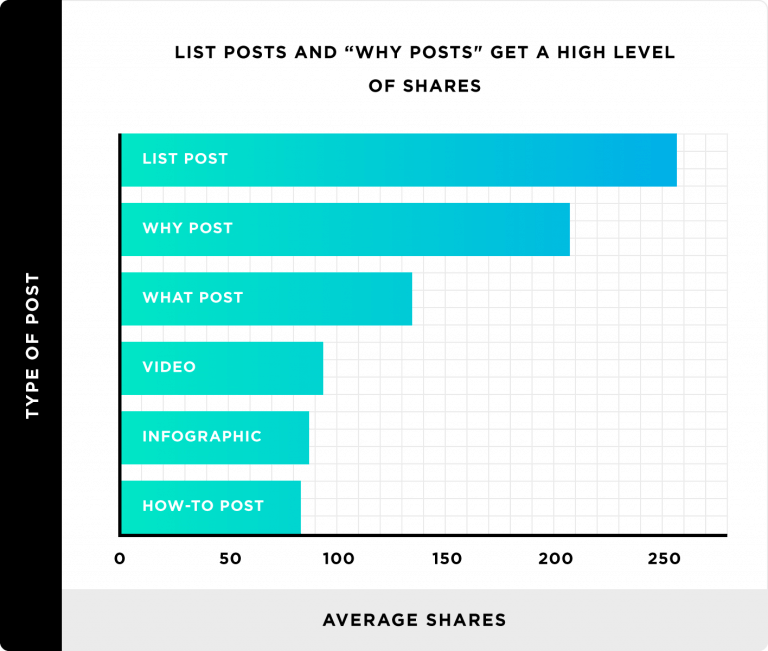
According to a study conducted by Backlinko list posts tend to get more shares than any other content format.
How To’s
Blogging isn’t writing!
Most people don’t search to read. They search to find solutions to their problems. A how-to post enables you to solve their problems using text, images, audios, and videos in a step-by-step process.
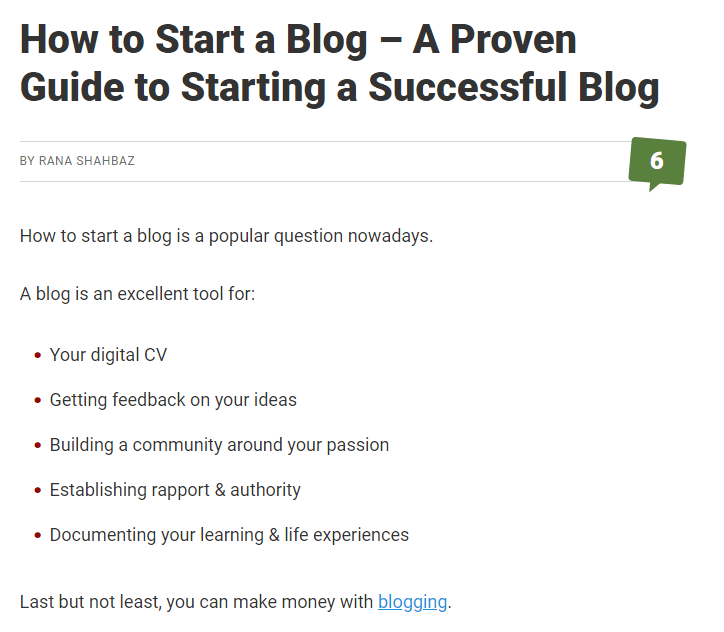
How to post tends to generate more traffic as they provide a solution to your readers’ problem.
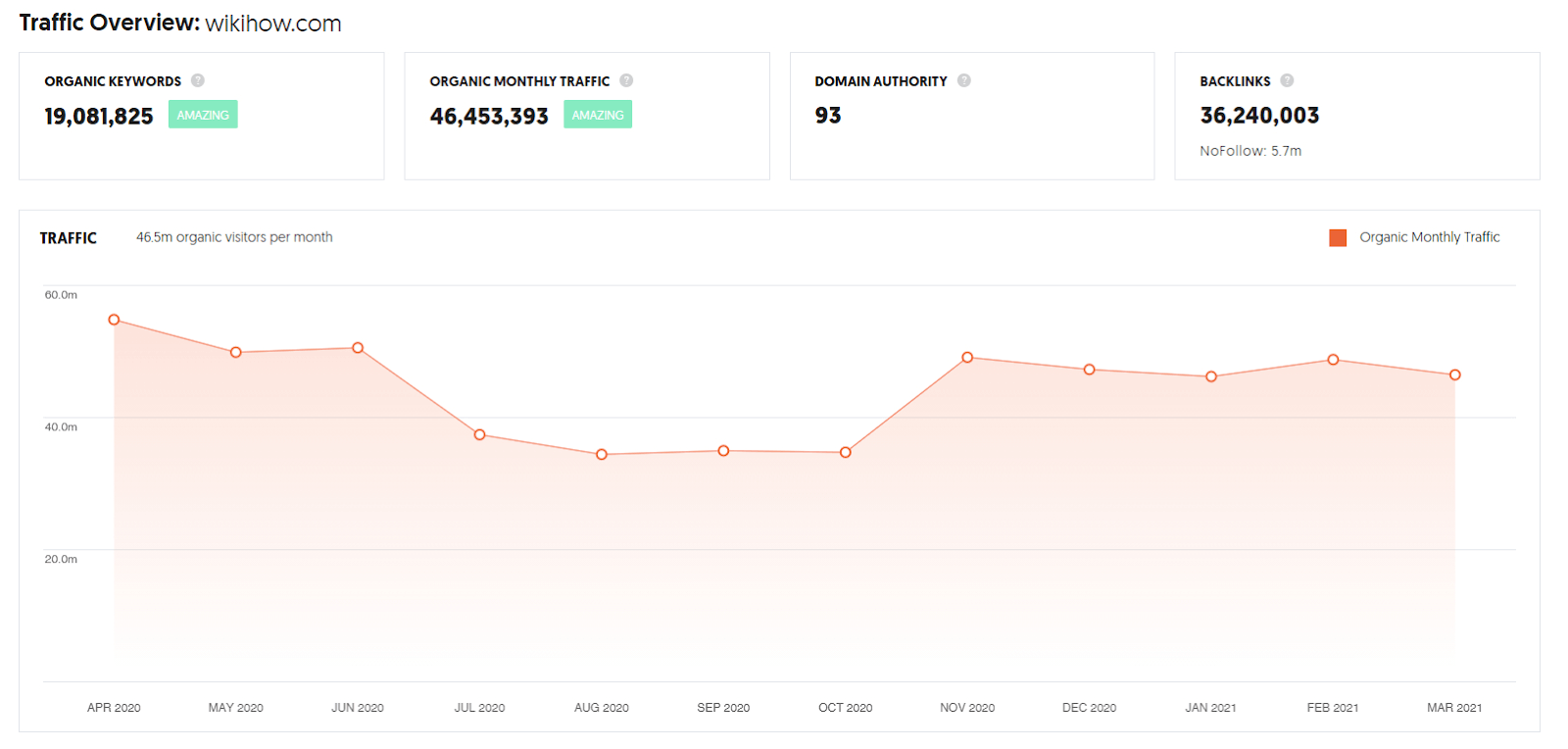
Wikihow has built an entire site around how-to’s and published over 340,000 how-to posts since 2005, bringing over 46 million visitors to their site.
Step by Step or a Definite Guide
Step-by-step guides are detailed versions of how-to posts, which cover every how-to step in detail. Mehdi’s definite guide on how to bench press with proper form with over 25,000 words is a classic example of how to write a definite guide.
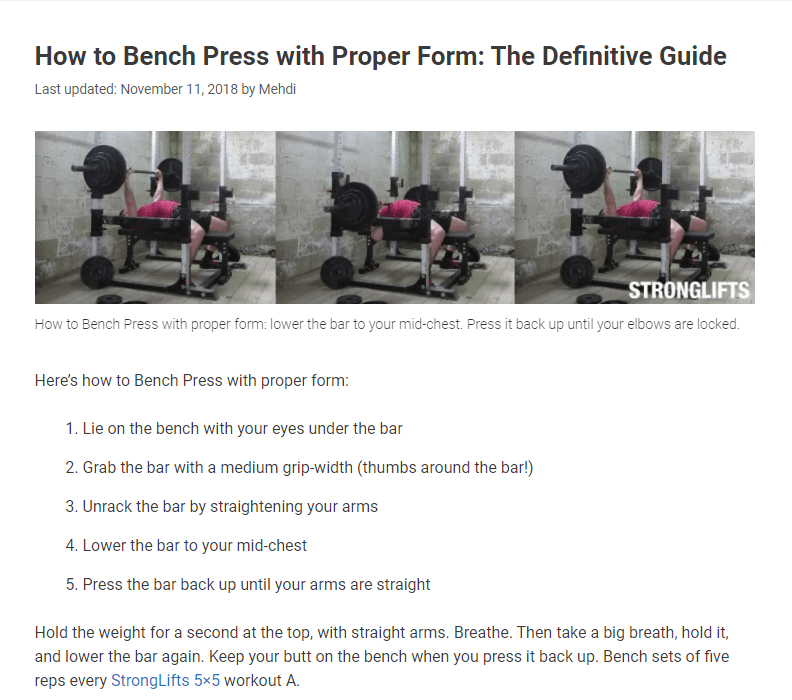
Producing these detailed guides requires a huge amount of effort and industry knowledge. That’s why producing these detailed guides is an excellent way to build authority in your niche and convert traffic into highly qualified leads.
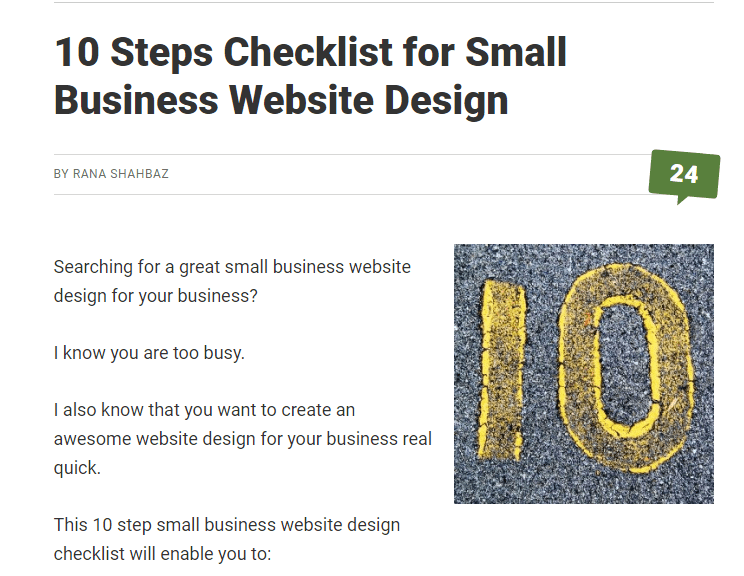
Checklists
The satisfaction of completing a task or checking something off the list is unmatched. Creating a checklist for your audience by providing a step-by-step breakdown of everything they need to do to achieve a task is a great way of helping them out. Checklists are lifesavers for performing repetitive tasks with speed and accuracy.
Interviews
If you are good at asking questions, interview posts can be a great source of creating valuable content and building a rapport by liaising with industry experts.
Interview posts also help you:
- Learn directly from industry experts
- Build relationships
- With post promotion

You’ll be pleasantly surprised to experience how most industry experts will go out of their way to help you succeed if you know how to seek help from them without wasting their precious time.
Comparative Analysis
I’m not sure about you, but I often read comparative posts before buying something important. A good comparative post saves you a lot of time in research and helps you make an informed purchase.
The process of creating a comparative analysis post is:
- Decide what you want to compare
- Choose 2 or 3 items max to compare
- Always do this if you have used the product or service personally
- Stay partial while sharing your experience
- Repeat

Picking your comparison points and formatting the data in an easy-to-digest format is the key to an engaging comparison analysis post.
Success Stories
Valarie Kaur, a documentary filmmaker shares in her book No Strangers.
“When I really want to hear another person’s story, I try to leave my preconceptions at the door and draw close to their telling. I am always partially listening to the thoughts in my own head when others are speaking, so I consciously quiet my thoughts and begin to listen with my senses.”
This is the power of stories and success stories are even harder to beat when it comes to connecting with your audience.
These are just a few examples, there are many more types of blogs that you could use to keep things interesting for yourself and your readers.
Post Idea Best Practice – One Topic Per Post
The challenge for most new bloggers in making progress is to find focus and writing consistently.
I can’t stress enough the power of thinking about one topic for a long period of time and writing in detail. If you revisit a topic continually your post’s quality will accumulate substantially over time.
Things that keep talented bloggers from achieving their potential:
- Trying to please everyone
- Writing about everything (scope creep)
- Following others without questioning why
- Sharing your attention between too many topics
- Keeping up with every social media channel
However, it’s usually more important to pick your post topic wisely than to be the smartest writer in the world.
The successful bloggers:
- Always focus on their niche & expertise
- Write one main point per post
- Never hold back and give credit freely
Creating each post to focus on one topic helps you:
- Stay focused
- Go into the topic details
- With better SEO
A blogger with a great mindset & clarity will usually beat someone with great execution and strategy.
Important Sections of a Blog Post
It is crucial to understand the different sections of a blog post if you genuinely care about the finish quality of your writing piece.
Having a clear understanding of the important section of a blog post will also help you get unstuck if you are struggling to start writing. The writing formula may vary from blogger to blogger, however, the blog post framework is mostly the same.
Without further ado let’s look at these important sections of the blogging framework.
Post Title
On average, 8 out of 10 people will read headline copy, but only 2 out of 10 will read the rest. This is why it is important to pay attention to create effective titles to increase the reach of your writing efforts.
Some even say that you should spend 80% of your writing time on crafting your headlines and 20% on writing your post.
Here are the few important ingredients of irresistible post titles:
- Use odd numbers (17 ways to promote your blog)
- Start with a question (What are the ways to improve your writing?)
- How to titles works great too (How to start blogging from scratch)
- Action words increase clicks (Seven ways to start writing like a pro)
- Address your audience (X ways you can find writing ideas)
Also, there are few things that you should avoid in your titles:
- Don’t use click baits if you can’t deliver on the promise
- Post titles, which looks like an advert
- Avoid really long post titles
According to Koechley, tests show that traffic to content at Upworthy can vary by as much as 500% simply because of the headline.
“The headline is our one chance to reach people who have a million other things that they’re thinking about, and who didn’t wake up in the morning wanting to care about feminism or climate change, or the policy details of the election,” he said.
Introduction
An irresistible blog post title only helps you earn a click. It doesn’t guarantee that people will read your blog post as you would expect them to.
That is the job of a perfectly crafted post-introduction.
A perfect introduction usually has the following key elements:
- Why: Building connection immediately why a reader clicked over to your blog post. You can do it simply by starting a blog post with an appropriate question
- How: A brief summary of how your blog post will address the reader’s quest
- What: A possible end result of spending the time to read your post

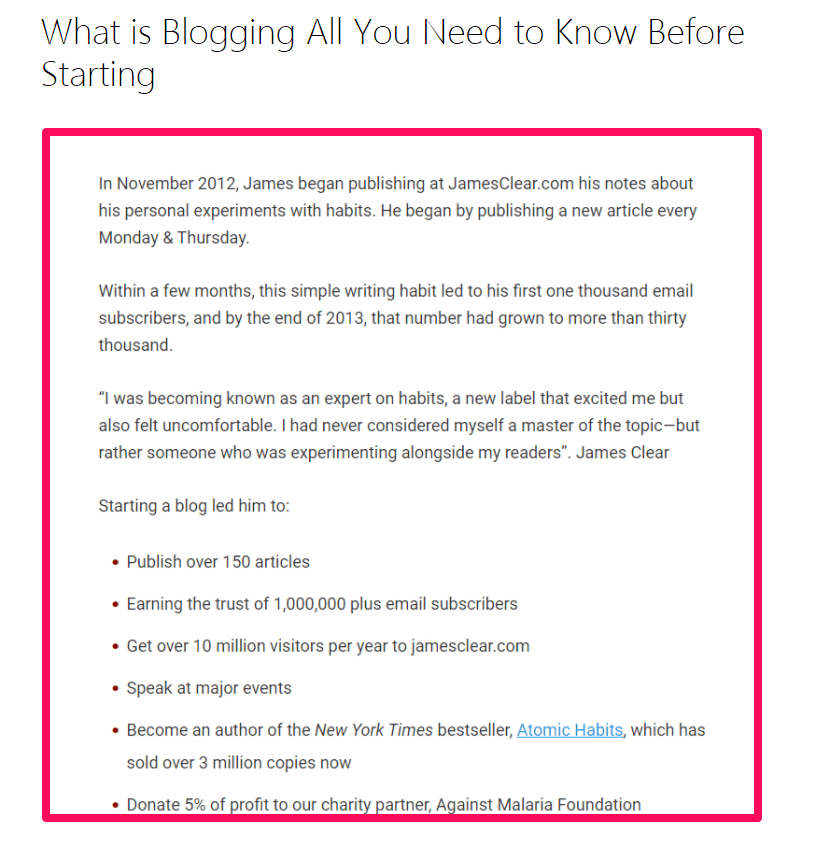
This is just one way of creating a blog post introduction. I also love starting a post with an interesting story or a case study.
Body
The blog post body is where you include the main content of your blog post. Most online readers will skim through your post instead of reading it word by word.
Here are a few things, which can help you create content that is easy to skim and digest.
- Use short paragraphs (avoid using more than 3 line paragraph)
- Include lots of bullet points
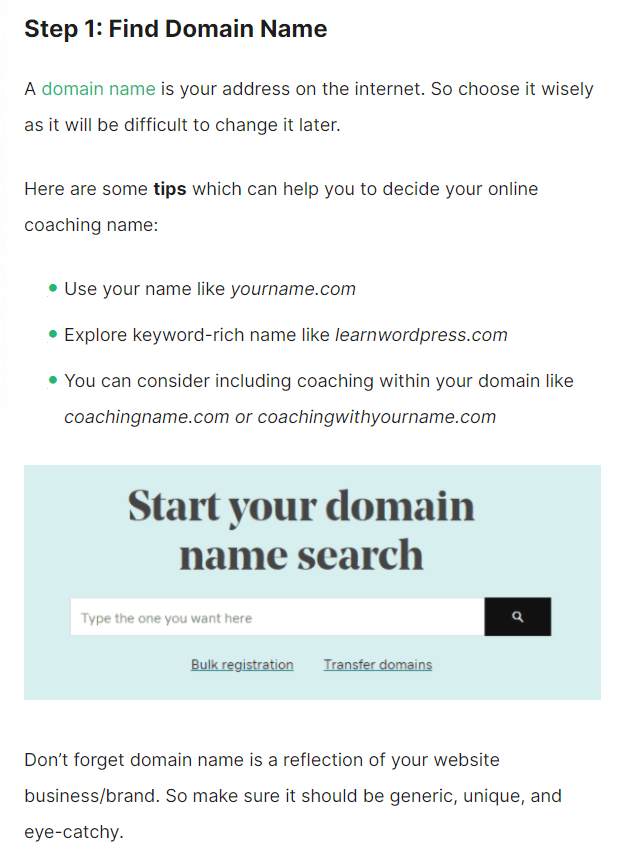
- Add images/screenshots to support your point
Conclusion
A good blog post reading experience feels like a speech, movie or a good play, which starts by capturing the audience’s attention, develops interest point by point, and ends with a strong takeaway.
Your all efforts can be wasted if you fail to write a solid conclusion. Also, probably this is the part of your blog post that your reader will remember the most.
Here are a few tips and examples for writing better conclusions for your blog posts.
- Summarize your main point
- You can try including a short story or a case study to inspire
- Don’t forget to add a call to action
How to Reference
Connecting people and ideas is the soul of the Internet.
I believe as bloggers it is really hard to come up with new ideas in most niches, however, curating the best ideas to make the original idea better is our main job. Therefore, understanding how to give credit when you use other people’s work in your writing is crucial.
A commonly referenced elements are:
- Ideas
- Quotes
- Stats
- Case studies/stories
- Creative common images
A few best practices on how to give credit when you use other people’s work is:
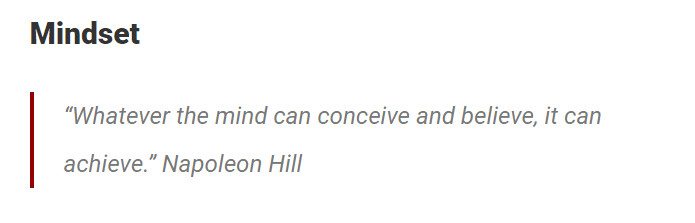
1. Mention a Name
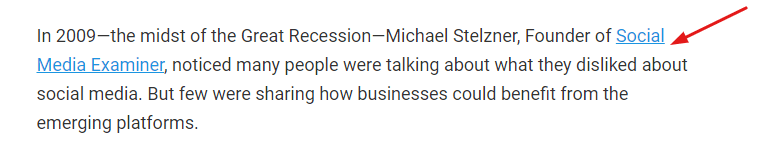
2. Hyperlink the Source
3. Add References in the Footnotes
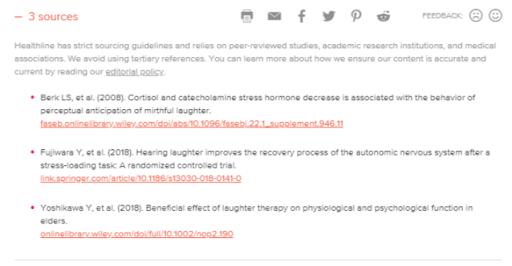
Citing quality and original sources adds credibility to your writing as well as acknowledges other people’s hard work, which helps them spread their work to more people. It is a win-win situation for both. Always give credit to the original source where possible.
Images Best Practices
They say a picture is usually worth a thousand words.
Sometimes words are not enough to convey your point or you may be looking to use an image to improve your content reading experience.
Use Quality Images
A poor quality image can cause serious harm to your content. In fact, you’ll be better off using no image at all than using low-quality images. It requires efforts to find or create quality images, however, they add value to your content accordingly as well.
Caption Your Images
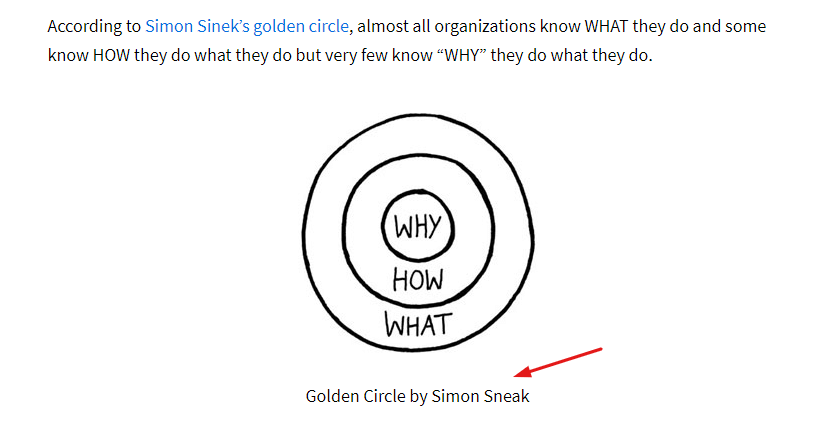
Wherever you decide to use an image in your blog post, don’t forget to caption it. Take advantage of these easy to use captions and utilize them properly for your advantage.
Number of Images
There is no accurate number of how many images you should use. You can use as many images as you want or are required. Some argue it is ideal to use an image every 150 words, while others say it should be for every 300-350 words. Whatever you decide to do just don’t make your blog look like an Instagram feed. Every image you use should fulfill the purpose of supporting your written content in one way or another.
Screenshots
Screenshot is an easy way to produce quality/helpful images easily. There are different ways of taking screenshots and many tools are available for this purpose. Adding a screenshot to your blog can make it more powerful and it is probably the best way to demonstrate your point, especially if you are creating a how-to guide.

Optimize Images
As great as images may sound but large images always come with the drawback of affecting the speed of your blog adversely. So never forget to optimize the images in a way that the quality is maintained but the file size is reduced.
Create Your Own Images
Creating your own images will be an ideal way to add value to your blog content. You can convert statistics or maybe a quote into an image. Or you can use tools such as Canva for creating your own images easily.
Free Image Sources
You can’t use any image that you find on the internet. Before you add any image to your blog, ensure you have permission to do so by the creator. Sites like Unsplash & Pixabay offer a great choice of creative common images, which you can use.
Creative Commons License Best Practices
Some creative common licenses require you to give credit when you use any image, some don’t have this requirement. However, it is a good practice to give credit to the image creator.
Formatting
How you package your blog content can make a big difference in the finish quality of your content and formatting plays a key role in packaging.
They say a site visitor on average decides in seven seconds to stay to leave your page and most online readers prefer to skim through the content before they decide to read.
Key elements of formatting are:
- Font: A selection of a perfect font can dramatically change the look of your content.
- Font size: 16px is the new 12px font size. Bigger font size is easier to read on different devices and also helps visually impaired readers to consume your content.
- Short paragraphs: I avoid using a paragraph, which is more than three lines long.
- Small sentences: Smaller sentences are easy to write and easy to read.
- Lots of bullet points: Helps with online readers who prefer to skim through the content.
- Images to break long text: Visuals help add value and convey the point faster.
- Headings: A great tool to break down your content in terms of its importance.
How to Format Headings
Capitalization of headings is a debatable topic but common practices are:
- The first letter of a heading should always be capitalized
- Every noun, verb, proper noun, adverb, and adjective should be capitalized
- Words like a, an, the, is, as, of, etc should never be capitalized. The should be capitalized only if it is a part of a name such as a book or a company
- But if your style is to use all lowercase then ignore these points since it’s your personal choice
- Use H1 only once on any page or post

How to Use Bold, Italic and Underline
Bold is used to highlight and emphasize important points and grab readers attention. They can also be used as a substitute for headings.
Italics are also used to grab the attention of a reader and highlight an important point, but they put a weaker emphasis on the point as compared to bold. They can be used to highlight a quote, name of a book, magazine, movie, etc, a dialogue, imagination, or words from a foreign language.
Underlines are not very commonly used in blogs as it becomes difficult to differentiate between a link and an underlined word or phrase.

These are a few important formatting tips to make your blog more appealing and easy to read.
Writing Voice
Your voice is the soul of your blog and the only thing which you can’t outsource.
It is hard to produce new ideas often, however, with your unique voice you can add freshness to any old ideas. It takes time and a lot of practice to find your voice. And the good news is that we all are unique from one another by birth; It’s just a matter of finding your uniqueness.
Here are the few things, which can help you find and polish your unique voice.
- Read work of different writers
- Write consistently
- Write as you are speaking to a friend
- Complain less, provide solutions & experiences more
- Have fun, enjoy the writing process
There’s nothing more important in writing than finding and developing your unique writing voice.
Ideal Post Length
It is hard to put word count on the ideal blog post length. An ideal blog post should be as long as it needs to make the point you are trying to make.
However, from the SEO data studies, best-performing posts in search results vary between 1600-2500 words per post. However, on the other side, Google has started to give a lot more SEO value to the overall user experience.
What that means is a 400 words blog post, which people are:
- Spending a lot more time reading
- Interacting in the comments
- Sharing a lot
This type of short post will do a lot better than a 2500 words post people are falling off as soon as they land on it.
Aiming for the best user experience must be your first priority and if that means you need to write a few thousand words to do that it will be a great way to produce an ideal post length.
Keep it as long as it is insightful, informative and engaging and it doesn’t get repetitive.
Internal & External Linking
Linking to relevant pieces of content is the best part of online writing.
Let’s have a look at linking terms and the best practices of linking to relevant pieces of content.
- External link: This is where you link to a third-party website or blog.
- Internal link: This is where you link to a relevant piece of content on your blog.
- Anchor text: Text you use to link externally or internally called anchor texts.
Here are the few best practices when it comes to linking in your blog post:
- Choose links based on quality & relevancy
- Don’t forget to include internal links to the relevant pages
- Use descriptive and keyword rich anchor texts
- There isn’t a fixed maximum number of links per page. Use a common-sense approach when adding too many links on a single page.
Links are a crucial part of the Internet user experience and the search engine visibility of your posts in the search results. Links are an excellent way to appreciate other people’s work and build relationships.
Proofreading
Proofreading is an important puzzle of producing a quality piece of content. I struggle with proofread myself and trying my best to improve.
However, if your blog post managed to help someone do something, which he or she was looking to accomplish that far outweighs a couple of grammatical and spelling errors.
Having said this, I believe you should do your best to minimize grammatical and spelling mistakes before publishing.
You can have a friend or a co-worker review it, although having anyone else critique your work is not always easy but it is better than random readers pointing out mistakes for you.
My Favorite Blog Post Writing Framework
I’m fond of creating frameworks to simplify the process while leaving room for creativity.
There is a commonly practised framework for building a house.
- Brainstorming (your needs & budget)
- Design (architecture)
- Planning approval (red tape)
- Building work (messy part)
- Interior design (art work)
Although almost everyone follows the same framework every house is different. Because frameworks give you the confidence to start without limiting your creativity.
My favourite blog post writing framework is:
- Start with a story
- The science behind the idea
- Practical steps to implement the idea
This writing framework always gives me a head-start to write a decent blog post.
Conclusion
We often avoid taking action and start writing because of the mindset that “I need to learn more,” but the best way to learn is often by taking action.
- Your favourite writer’s first piece of writing was just as bad as yours
- Don’t compare your first piece of writing with someone who has written hundreds of blog posts
- Action creates passion, start now and optimize later
Enjoy writing!